News

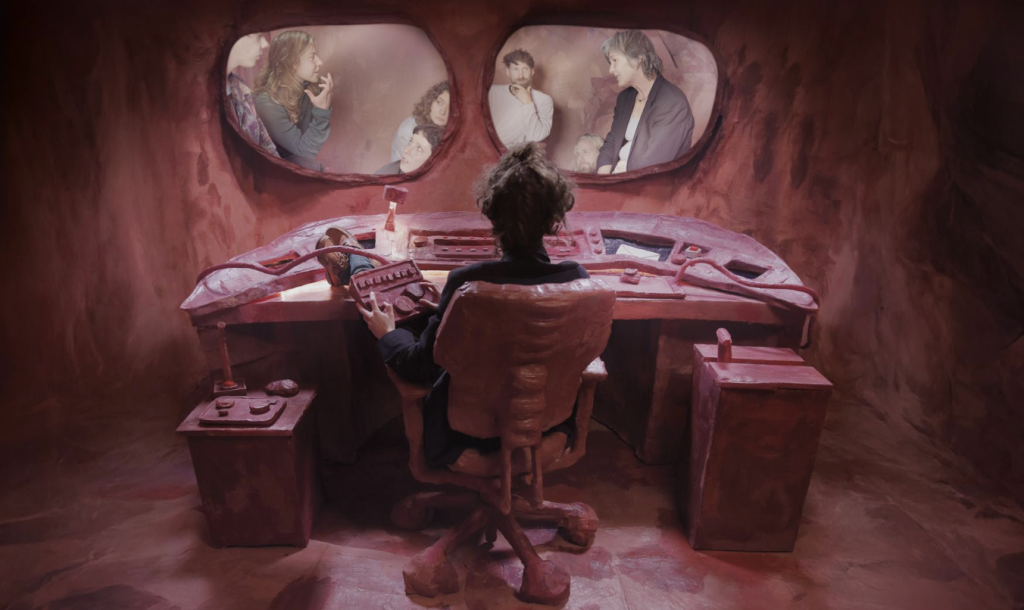
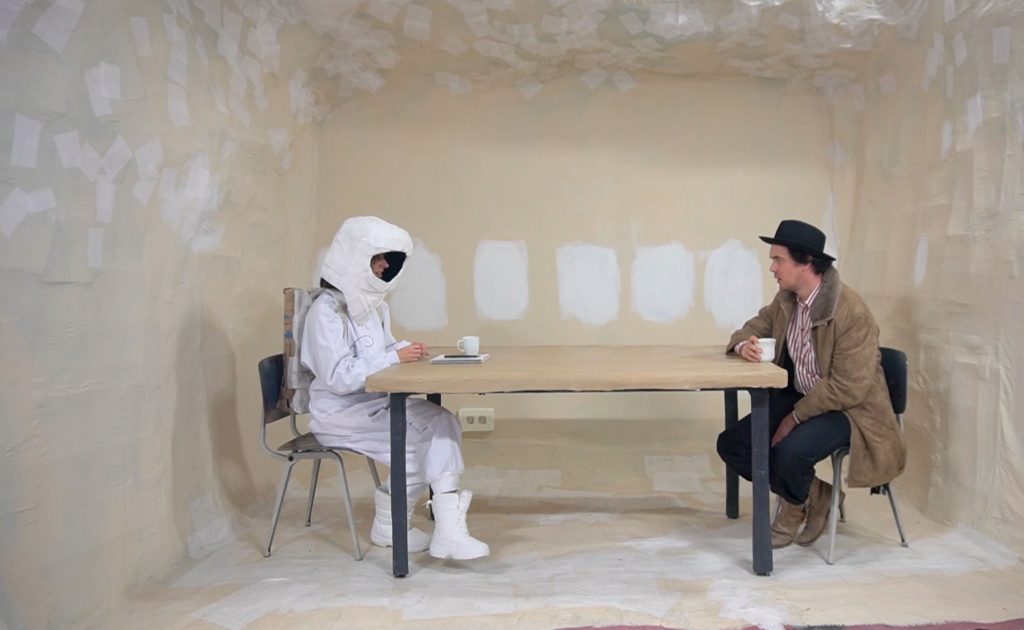
CHERRY BLOSSOMS - Expo

Concept, script, directed by: An van. Dienderen

Short Film & artist’s book - Free - continuous - 15'
15.05 - 14:00 > 20:00
16, 17, 22, 23, 24.05 - 14:00 > 17:00

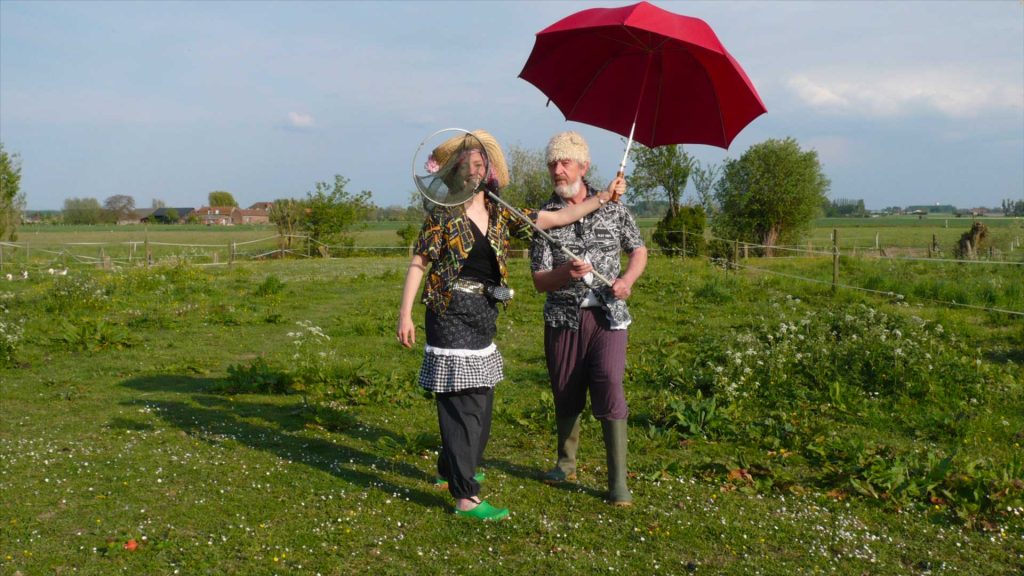
Translation is generally seen as a secondary phenomenon, with the interpreter hidden behind the speaker. The paradoxical thing about interpreters is that they are generally viewed as being just ‘part of the furniture’, while they are sometimes party to the most confidential discussions. In the European Union they are indispensable. The United Nations make do with just six working languages but the EU uses no less than 23! An van. Dienderen was inspired by the interpreting booths in European institutions. Cherry Blossoms is both a short film and an artist’s book at the boundary between fiction and documentary.

Location: Brussels-Europe Liaison Office, Oudergemlaan 63, 1040 Etterbeek

CALL FOR PROJECTS 2014 is open !

The SIC team decided to announce its call for projects sooner so that the selection process can be finetuned and the seminars and international guests can be matched better to the needs of the participants.

UPCOMING DATES

Observation & Cityscape with Els Opsomer -> 6/05, 7/05, 8/05
Seminar Els Dietvorst -> 22/05, 23/05, 24/05

(more info on content below)

The SIC seminars are open to non- SIC participants, mail soundimageculture@gmail.com if you would like more info or wish to participate.

sic presentations
Send us e-mail if you would like to receive more info on our presentations. Or follow us on Facebook !

Annemie Maes (SIC 2009)
Luke Moody (SIC 2009)
Eisa Jocson (SIC 2010)
Dodda Maggy (SIC 2010)
Saïd Abitar (SIC 2011)
Laurent Lafuma (SIC 2011)
Charles Fairbanks (SIC 2008)
Joshua Rickard (SIC 2011)
Nathalie Zaccaï Reyners (SIC 2009)
Bram Crevits (SIC 2011)
Ségolène Neyroud (SIC 2010)
Charlotte Grégoire (SIC 2009)
Angelo Vermeulen (SIC 2009)
Luke Moody (SIC 2009)
Marie Géhin (SIC 2009)
Marta Kucza (SIC 2009)
Alessandra Coppola (SIC 2011)
Christine Moderbacher (SIC 2011)
Matthias De Groof (SIC 2007)
Beatriz Veliz Argueta (SIC 2011)
Tine Guns (SIC 2010)
Marieke Rodenburg (SIC 2007)
Gregory Gan (SIC 2010)
Lola Pauwels (SIC 2010)
Charlotte Grégoire (SIC 2009)
Flo Flamme & Robbrecht Desmet (SIC 2011)
Tülin Özdemir (SIC 2007)
Deniz Kazma (SIC 2008)
Tine Guns (SIC 2010)
Charles Fairbanks (SIC 2008)
Lieve Willekens (SIC 2007)
Susanne Weck (SIC 2010)
Cécile Michel (SIC 2010)

SoundImageCulture / SIC is a group of artist-anthropologists committed to artful storytelling through real human encounters that challenge documentary conventions, and opens up to sound and image installations. SIC offers a nine-month program to assist professional filmmakers, social scientists and artists in the realization of their personal project. The SIC involves a broad spectrum of theoretical perspectives and practical workshops so as to link formal and ethical questions during the production process as each creator develops their original, personal point of view.

Informed by developments in cultural theory, social sciences, and the visual arts (Laura Marks, Arjun Appadurai, Jean Rouch, Trinh Minh-ha en Jonas Mekas) we question the relation between artist, subject and viewer. The answer is not to eschew representation; rather, SIC proposes an ethical reflection on how ‘the other’ is presented in contemporary media: we believe this to be an urgency of the multicultural society we live in. The SIC involves nine months of artistic coaching through collective seminars, individual advising, group critiques, and inter-artist dialogue. For additional perspectives, we occasionally host visiting artists and critics.

Collective

An van. Dienderen

An van. Dienderen

Master in the Audiovisual arts, Sint-Lukas, Brussels. Master and phd. Comparative Cultural Sciences, UGent. Visiting scholar UC Berkeley (California).
Filmmaker and essayist. Postdoctoral researcher at the Royal Academie of Fine Arts, Ghent. An is artistic director of SIC.

Laurent Van Lancker

Laurent Van Lancker

LVL both studied Film and Anthropology, and holds a PhD in Art. He lectures at filmschools (INSAS, IAD), and universities (FU Berlin) and SIC workspace. His early works illuminate social and religious aspects, e.g. Ymako (B.Wright Price 98) or Moving with Clouds (Prix Jeunes Cinéma d'Asie Fest. 99). Followed by a series of short films, called 'Experimental Ethnographies'. (f.i. 'disorient' VideoEx prize 2011). His long-feature film 'Surya', won international Awards (Rodos, SCAM 2007), and had a theatrical release.

Eric Pauwels

Eric Pauwels

Master in film directing INSAS, Brussels. Religious Science Laboratoire Audio-Visuel à l’Ecole Pratique des Hautes Etudes. Phd Cinématographie Sorbonne, Paris (promotor Jean Rouch). Studio lector INSAS. Writer of novels and theatre plays. Realised and produced a number of documentaries.
Eric is a coach and conducts the "Root Seminar".

Didier Volckaert

Didier Volckaert

Didier Volckaert is an Artist and Neo-Futurist. He created Optical Installations, made several award winning Documentaries and even a Fiction Feature Film. His main interests apart from life and Cinema are Japanese Pop Culture, Industrial Music and Art, Toys, Pirates and Piracy, Science Fiction and the Exotic.
Didier is a coach and conducts the "Active Experimental Workshop".

Mary Jiménez

Mary Jiménez

Master in Architecture from the University of Engineers at Lima-Peru, she has studied film production at the INSAS, directing actors at the Ron Burrus studio in Los Angeles. She has directed 3 feature films and ten documentaries and several radiophonic pieces. All have been shown in selected festivals and many have gotten several prices. She has been teaching film making and directing actors in Escuela de los Banos, Cuba, at the art school in Lausanne (ECAL) at the INSAS and IAD in Brussels.

Rudi Maerten

Rudi Maerten

Formed in editing at INSAS, Brussels.
Editor of short films, documentaries and fiction films.
Worked with Anne Térésa de Keersmaeker, Marie Jo Lafontaine, Thierry de Mey, Wim Vandekeybus etc.
Rudi coaches the editing.

Pieter Van Bogaert

Pieter Van Bogaert

PPieter Van Bogaert is a critic and curator. He is a regular contributor for Belgian arts magazine ‹H›ART and other publications. He made exhibitions for Bergen Kunsthall, Witte de With, Z33, Netwerk, deBuren and the office of square. He is the curator of 'Blijven Kijken / Ce qui nous regarde / Dropouts', on display at M, Leuven until May 12, 2013. Pieter conducts the workshop "Text and Context".

Patrick Codenys

Patrick Codenys

He started his musical career within the electronic group Front242 - their sources of inspiration range from architecture, graphic design to film. His work with the artist Kendell Geers explores the field of Contemporary Performance Art. Patrick Codenys is professor of "Sound Creation" at La Cambre - Brussels. Patrick is coach and conducts the workshop "Sound and Spatialization".
www.front242.com

Els Opsomer

Els Opsomer

Els Opsomer is a Brussels based visual artist. Her artwork stems from a constantly expanding archive of urban images [archive building]. By analyzing our globalized reality, she exposes the challenging notion of personal integrity within it. Recent 16mm films depict the fate of modern utopias and their lost grandeur. She participated in international biennial exhibitions, is former resident of the Rijksakademie Amsterdam and lectures at Sint-Lukas Brussel.

Wim Viaene

Wim Viaene

Wim Viaene is anthropologist and freelance consultant in the creative sector.
He has been the financial director of WALPURGIS - Contemporary music / theatre and the Kunstenfestival 0090 .
"Working at the intersection of Anthropology, contemporary art and cinema: Feels like coming home."
Since the end of 2012 he coordinates SIC.

Els Dietvorst

Els Dietvorst

Els Dietvorst is a Belgian artist and filmmaker who lives and works in Duncormick, Wexford(IRL). Her work focuses on communication, collaboration and social conflicts. She often returns to anti-utopian themes such as the outsider, the human condition, the symbolic prison. In her long-time film projects she works in non-places and socially contested sites where she collaborates with the people who host/inhabit these places. She uses film and other media like drawing, writing and sculpture.

Jeff Silva

Jeff Silva

Jeff Silva studied Cinema and Photography at Ithaca College and received a Master in Visual Art from Vermont College of Fine Arts (Montpelier). His films and installations have been exhibited at festivals, galleries and museums internationally. Currently, Jeff is a professor of film at the School of the Museum of Fine Arts (SMFA) and is in production on three feature projects that explore the threshold between documentary, contemporary art and fiction film.

Ben Russell

Ben Russell

Ben Russell is an artist and curator whose films, installations, and performances foster a deep engagement with the history and semiotics of the moving image.  He received a 2008 Guggenheim Fellowship and a 2010 FIPRESCI award and he has had solo screenings and exhibitions at the Museum of Contemporary Art Chicago and the Museum of Modern Art. Ben conducts the workshop "Psychedelic Ethnography".
www.dimeshow.com

Workspace

Auto-production *author-as-producer

In SIC the artist is producer for his or her own work, and participants retain all copyrights to their project and materials.

SIC doesn’t offer studio space, recording equipment, or bursaries. Participants are expected to have or find their own means for filming, editing, and so on.

Cross over

SIC operates at the intersection between art and anthropology. Contemporary anthropology addresses the need to represent the world of ‘the other’ without reducing it to Eurocentric, exclusively Western, or neo-colonial categories. Arising partly from this need, we have witnessed the ‘sensory turn of anthropology’ for which video, film, and sound are crucial to recording and expressing cultural experience.

The converse has been seen in what art critic Hal Foster calls ‘the ethnographic turn of contemporary arts.’ Myriad contemporary artists now work ethnographically and share content with the field of anthropology: e.g. nationalisms, migration, and expressions of identity. SIC coach An van.Dienderen explores this interaction by postdoctoral artistic research at the KASK art academy in Ghent.

Performative documentary

We conceive the audiovisual as a performance in which the encounter will lead the process. The interaction, negotiation, or confrontation in the documentary encounter is the force that drives this artistic process.

Medium

SIC does not believe that representational media are mirrors that reflect reality, but rather systems through which different identities can be performed. We stimulate participants to understand cultural identity not in terms of authenticity, but as the way by which groups and individuals are imagined and articulated. For this reason, SIC believes that participating artists should use whichever media are appropriate for the project in question: film, video, photography, sound, etcetera.

Workshops

The projects are accompanied by collective seminars, individual coaching and dialogue with a coach of the SIC team.

Text and Context Pieter Van Bogaert
This seminar reflects upon the relation between form and content through the critical analysis of texts (by a.o. Ariella Azoulay, Georges Didi-Huberman, Laura U. Marks, Kodwo Eshun) and contexts (by a.o. Elias Sanbar, Renzo Martens, Black Audio Film Collective). Topics include spectatorship, representation, resistance, exotism, voyeurism and more.

Root Seminar Eric Pauwels
The aim of this seminar is to critically examine key-works in documentary film history. Special attention is given to films made in first person, by film authors who reflect upon the position of the viewer and the distance to ‘the other’ (Rouch, Mekas, Gheerbrant, Van der Keuken, ...). The emphasis is on the ethical core of each encounter. The film is understood as a creation shared between filmmaker and the people filmed.

Sound – Narration – Representation Laurent Van Lancker
Analysis of films and documentaries (Trinh T. Minh-ha, Alexander Sukurov, Hans-jurgen Syberberg, Sergei Losnitsa, Pedro Costa, Aline Moens) presenting new narrative forms and original soundscapes. This seminar encourages the participants to experiment with sound and narrativity in a sensorial way. The concept of ‘local aesthetics’ is questioned by analysing films with similar topics and narrative structures, made by directors with mixed cultural origins.

Psychedelic Ethnography Ben Russel
This workshop is conceptually organized around the seemingly opposite poles of psychedelia and ethnography, two approaches which have the same goal at heart: the understanding of our/selves in the world.  Taking its cues from current trends in contemporary art that feature a nostalgic turn towards modernist notions of the sublime and the phenomenological on the one hand and a willful reinvention of non-fiction on the other, this workshop proposes a critical study of past and present in order to forge a new way forward.  Drawing from the flicker films of Paul Sharits to the trance anthropologies of Jean Rouch; from the embodied abstractions of Jordan Belson to the subjective ethnographies of Robert Gardner, the end result will be a syncretic understanding of how these touchstones can be integrated into a filmmaking practice.

Sound and Spatialization Patrick Codenys
This active workshop turns around sound, its technics and possibilities for narration. Site specificity and perception are accentuated and experimented with. Placing and a possible circulation of the public are at stake as well as rhythm, temporality, duration and orientation of a work.

Active Experimental Workshop Didier Volckaert
The seminar of Didier Volckaert brings us back to the basics of Cinema and the use of AudioVisual Media today. It reflects on the fact that the difference between Anthropology and Visual Anthropology (or Documentary in the broadest sense) is the use of a machine, a technological construction, as means of direct communication (filmmaker--other) and delayed output (filmmaker--other--public). It opens up this awareness for any use of AudioVisual Media in Art, Science and even entertainment. The seminar is a manifest against the dominant position of language in our Culture and a confrontation with the complexity of images. But it’s also the joy of exploration, experimentation and a renewed sense of freedom in our standardized media society. By re-tracing the origins of our machines in Pre-Cinema and Dead Media we try to understand their parameters and how we can use them to give sense and meaning, to communicate our point of view and to create Art. All of this brought to you in both a sensorial and active way in direct relationship to your own project.

Observation and Cityscapes ,_ around the heart Els Opsomer
In this playful workshop we focus on possibilities of participating and reading an urban landscape in relation to different moods. One introduction walk is organized. We visit different studios and films related to the participant’s interests are shown. The last day participants show a possible “valley of tears / tränenpalast” in Brussels and these spots will form a closure walk of the workshop. Questioning personal strategies and methods in creating artistic works is the main goal and hopefully sharing each others reading will enlarge every participants view.

Implicit Knowledge: On Seeing, Hearing and Believing in Cinema Jeff Silva
Cinema, particularly non-fiction film, is bound up by the lived experience, by the index, by the "actuality" of human existence.  But cinema is also a powerful form of magic; it's a kinesthetic dance of movement, light, color and sonic vibrations that penetrates our bodies and can alter our perception to embed alternate forms of knowledge that can have a lasting impact on the viewer long after the ephemeral images on the screen have disappeared.  How do we find conjoin meaning, memory and affect in a productive way?  How might we create implicit cultural stories that engage the audience as collaborators in the construction process? How can ethnographically inflected works benefit from these ideas?  We shall attempt to probe these questions by exploring the very essence of cinema, and how we see and hear.

Practical Exercices Laurent Van Lancker and Mary Jiménez
Through a series of exercises the participants will try out different modes of representations of reality, such as 'auto-ethnography', the performative and poetic approach. The exercises will be screened and discussed collectively.

Production Laurent Van Lancker
An introduction to the different channels that exist to find support for your project. Whenever applicable, participants are also supported in writing their applications.

Editing sessions Rudi Maerten
The SIC participants, faculty and a professional documentary editor come together to discuss the edits in progress, and to reflect upon the point of view, audiovisual communication, narration, and any problems that arise.

Participants 2013

Julien Cohen and Nicolas Tubery

Serge and Nana, in there mid fifites. He paints, she writes poems. She is Armenian, he is Russian. They live in Paris, since ten years. We have met them there, a friendship was born. Slowly, two viewpoints met, one of us is close to Serge, the other finds a soulmate in Nana. From our four identities a corresponding way of looking at the world is distilled: one in which words are central, the other in which the making of silent images essential.

Justine François

This project takes us to the heart of Kinshasha, to meet eight street children. One year after being actors in a fiction film, we retrace these children to see how this experience has shaken their daily lives. My film raises different questions: it takes us to the universe and daily life of these children, it questions the weakness of non-governmental and international organizations and points out the difficulties to re-insert these kids that grow up in a weak socio-economic context.

Carole Messmer

I’ve left for Rwanda to make a documentary. There I met Charles, a young man who escaped from the genocide. We became friends and I decided to make a documentary on his story.The subject would be the story of Carole and Charles. To my utmost surprise, the reactions to my filmwork where strong and conflicting. By working on this project I would like to find out what is the relation between the intimate and the universal, my story and that of the genocide in Rwanda. Am I well place to tell the story of someone else? What are the limits of the political correct? What is exotism? Are we able to surpass our prejudgements? Will we always carry the burden of history?

Toshie Takeuchi

"A house exists in-between-zone" (provisional title)
"In-between-zone" is my own term, which describes a physical and metaphorical space that exists in between two or more political statuses or relationships. It is like a limbo.
Being inspired by a squatted former embassy building, which is used as a "free zone of culture", I want to explore the in-between-zone through an experimental narrative film.I aim to explore ambiguity of laws and politics through my personal perspective. I also try to review the basic human relationships and emotions - dilemma or conflict that are derived from experiencing the ambivalence and uncertainty.

Rut Karin Zettergren and Sonia Hedstrand

Nollywood Hustlers is a project based in an exploration of video art bordering to visual anthropology. We will record two movies in Nollywood, Lagos, Nigeria. The first film Nolly 2032 is a futuristic ethnofiction about Nollywood in 20 years from now, when the Nigerian film industry has taken over the world's cinemas. The second film Nollywood Hustlers, is "the making of the Nollywood movie", a docufiction where we act as our alter egos, two Swedish immigrant artists who have fled the European economic crisis to make it in the Nollywood!

Sanaz Azari

Alors tout va bien

Bujumbura, Novembre 2010. Frédérique Lecomte, Belgian director, stages a play on corruption with local actors. All rehearsals are in Kirundi. Three of the actors speak french and translate. I aimed my camera at the translators and with my back to the stage. The translator becomes an actor in my film. The translator is the reflection of a scene that we only can see through his eyes , his expressions, his translated words. We as spectators can imagine one thousand and one things and movements that go on on stage, the stage as image of a country, Burundi.

Florence Aigner

My project is an exploration, at times doucumentary, at times more of an an impression, of the Algerian recollections of my family and of other Algerian Jews, who were forced to leave, brutally, from Algeria after centuries, when the country became independent. What is being handed over of this landless history ? What impression was left from one generation to another, in our body, our souls, our identities and our daily gestures ? Starting from soundrecordings of stories and atmospheres , this project questions the memory of the protagonists with whom different images are created, moving images and stills, and are placed in a dialogue.

Philippe Gazagne

LAVOMATIC
Through this audiovisual project, I explore the relationships between different persons in a very mixed neighborhood of Geneva (called les Pâquis). I wonder how this urban mix concretely interacts socially. What are the actual relations which develop in this area? In what circumstances do people start to interact, from a situation of mere coexistence to some familiarity or even assistance ? Right in the heart of les Pâquis, a place of social proximity drew my attention : the laundromat. I decided to explore the daily life of this space as a gateway to life in the neighborhood. Through the lens of a camera, I seek to look at the role of perception, imagination and emotion in human interactions.

Archive

2012

Caroline Daish
Christine Moderbacher
Emilie Kengmo Chappatte
Eva la Cour
Helena Dembsky
Isobel Clouter
Jaason von Bannisseht
Julie De Clercq
Julie Pfleiderer
Messaline Raverdy
Miki Ambrozy
Salomé Laloux-Bard

2011

Alessandra Coppola
Joshua Rickard
Flo Flamme & Robbrecht Desmet
Beatriz Veliz Argueta
Christine Moderbacher
Alberto Gerosa
Saïd Abitar
Bram Crevits
Julie Pfleiderer
Or Marin
Laurent Lafuma

2010

Alexia Bonta
Gregory Gan
Tine Guns
Eisa Jocson
Dodda Maggy
Cécile Michel
Ségolène Neyroud
Lola Pauwels
Sandra Sykorova
Susanne Weck

2009

Marie Géhin
Charlotte Grégoire
Marta Kucza
Annemie Maes
Luke Moody
Angelo Vermeulen
Nadine Wanono
Mieke Witkamp
Nathalie Zaccaï Reyners

2008

Eva David
Charles Fairbanks
Deniz Kazma

2007

Catherine Montondo
Tülin Özdemir
Marieke Rodenburg
Chloë Salembier
Lieve Willekens
Matthias De Groof

Application SIC 2014

Selection

Interested candidates in SIC should submit their application anytime before November 2013. The SIC team will review the applications and invite finalists for interview in January 2014. Each year SIC is open to a maximum of 10 participants. SIC is especially interested in project proposals in which artistic development goes together with antropological influences.

Participants

SIC is open to people with experience in the arts and anthroplogy. The selection is based on an audiovisual project proposal (film, video installation, sound creation,…) submitted by the candidate which contains following paragraphs: What is the subject of your project and why do you want to make it? What’s the relation between the author and his or her subject/"other": what is the type of interaction between author and subject and how can this relation be specified? Is there a viewer involved, prefigured, abstract or concrete? What is your formal approach, what is the relation between your subject and the form you choose?

Practical info

SIC is open for participants who speak Dutch, French and English. The SIC team speaks and understands these 3 languages. The modules and groupsessions are in English.

Send your application by email

The application should include:

  • Project proposal
  • CV
  • Portfolio (condensed and relevant for the proposal)
  • Images through youtube/vimeo/others

SIC 2014
Deadline : November 2013
Interviews : January 2014
Selection notification: January 21, 2013
Start : March 2014
End : December 2014

Course fee

Fee: 1000 euro
The subscription fee should be transfered to our bank account (IBAN BE61 0682 5170 4317 BIC GKCCBEBB) before the start of the first seminar in March. If necessary, participants can request a payment plan.
Foreign candidates must arrange the necessary papers to stay in Belgium: e.g. a student visa or an official residence permit.